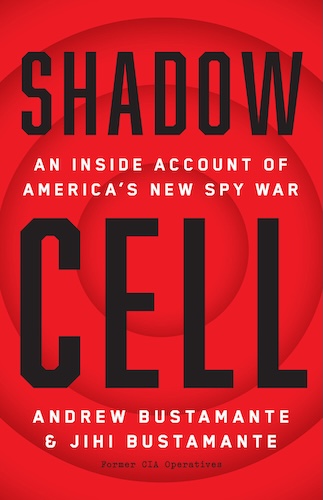
This book tells the (apparently true) story of Andrew and Jihi Bustamante, a married couple who worked for the CIA, and how they transformed how the CIA operates. In theory, this is also the story of some daring spy missions the couple took on, and a mole they helped uncover, but the need for secrecy means that most of the details that would make this part of the story interesting are excluded. The result is a look inside the CIA that reveals a few interesting details, but falls short of revealing anything deeply interesting, or turning into a truly thrilling spy tale.
The key insights in this book came from combining ideas from two different parts of the CIA. Jihi worked in counter-terrorism, helping to bring down Osama Bin Laden and Al-Qaeda. Andrew was an aspiring field agent, working on teams that sent out spies and recruited informants. By combining counter-terrorism ideas with field agent practices, they made two major changes to the CIA:
-
Cell networks. Apparently, the CIA was organized into a military-style, top-down command & control structure, which created two problems. First, there was a lot of red tape, and it was hard to move quickly, as everything required getting approvals through multiple layers of bureaucracy. Second, moles were devastatingly effective, as too many people had access to too much information across the entire organization. The solution was to copy the “cell networks” used by Al-Qaeda, where each cell works largely independently, and the members of a cell only know about each other and their tasks, but not any other cells. This allowed each cell to work much faster, and it greatly reduced the impact of moles, as, at worst, a mole could only reveal information about a single cell.
-
People networks. Apparently, when working with informants, the CIA was mostly focused on what those informants knew. This meant that the only useful informants were those who were highly-placed enough to know important secrets; unfortunately, these were also the hardest people to get access to. The solution was again to copy a technique used in counter-terrorism, where you recruit informants not just for what they know, but also who they know. A taxi driver or restaurant owner are much easier to access, and while they might not know any major secrets, they sometimes know all the people involved in those secrets, and navigating those people networks can reveal incredibly valuable information.
Given that almost every spy and resistance story I’ve ever read from the last 50+ years has made heavy use of (1) and (2), I’m a bit skeptical that the CIA didn’t use any of these practices until the Bustamante’s came along, but who knows.
The book walks you through how they used these two insights to recruit agents in a country code-named “Falcon.” To protect CIA secrets, the real name of the country is intentionally hidden. In fact, due to the (understandable) need for secrecy, most of what happened in Falcon is hidden from us too. Large parts of the story are either explicitly omitted (“we can’t say how we did this, but use your imagination”) or implicitly omitted (items you as the reader clearly expect them to discuss, but aren’t mentioned at all), and with so much cut out, the story feels dry, incomplete, and underwhelming.
You do get a few interesting anecdotes and a handful of fun insights (e.g., CIA agents are encouraged to date each other, as building relationships with people outside the CIA, to whom you can’t reveal what you do, is considerably more problematic), but I can’t help but think how much better this book could’ve been if it was written years later, when more of the secrets could’ve been safely revealed, and we could’ve gotten a much deeper glimpse inside the CIA, and a much more exciting story that would’ve told us where Falcon really is and what actually happened there.